Why I Prefer Visiting Eastern Europe More Than Western Europe
Where Have I Traveled?
I’ve traveled extensively throughout Europe, visiting both Western and Eastern countries. While Western Europe was my introduction to international travel, it was Eastern Europe that truly changed the way I experience new places. Over time, I realized that I consistently felt more connected, more relaxed, and more present while traveling in the East — and that’s why I now find myself gravitating there more often.
This isn’t to say Western Europe isn’t beautiful or worth visiting. It absolutely is. But for my travel style, Eastern Europe offers something that feels harder to come by elsewhere.
The most recent countries I have been to are Czechia, Slovakia, Slovenia, Hungary, and Bulgaria.
But why exactly am I beginning to prefer these countries over, say, Italy, Switzerland, or Germany?
What I Mean by “Eastern Europe”

Countries in Eastern Europe
Before diving in, it’s important to acknowledge that Eastern Europe isn’t a single experience. Each country, and even each city, has its own culture, history, and rhythm. That said, there are common threads I’ve noticed across my travels that shape why I prefer the region overall.
Don’t get me wrong — I love the West! The memories held in many of those countries are some of the best I have. And I absolutely plan on visiting even more of the West within the near future.
But something continues to draw me into the East.
Here are my top three reasons why I continue to prefer the East over the West:
The Vibe & Hospitality
The “vibe” of a place makes all the difference.
When I travel, I want a location that evokes something in me — mentally, physically, emotionally. I want to feel welcomed. I want to feel curious. Most importantly, I want to feel safe. A place that gives me a sense of ease and leaves me wanting more is always a good sign.
As a woman who occasionally travels solo, safety plays a major role in how I experience a destination. If I feel comfortable walking down quieter streets, whether during the day or at night, that speaks volumes about the overall atmosphere. Of course, no place is completely risk-free, and being aware of your surroundings is always important. But there’s a difference between being cautious and feeling uneasy — and I’ve noticed that difference far more often while traveling in Eastern Europe.
Hospitality plays a huge role in that feeling. The openness and friendliness in cafés, restaurants, hostels, and shops stood out to me time and time again throughout the East. It wasn’t flashy or forced — just genuine, everyday kindness that made me feel at home.
That’s not to say everything was perfect.
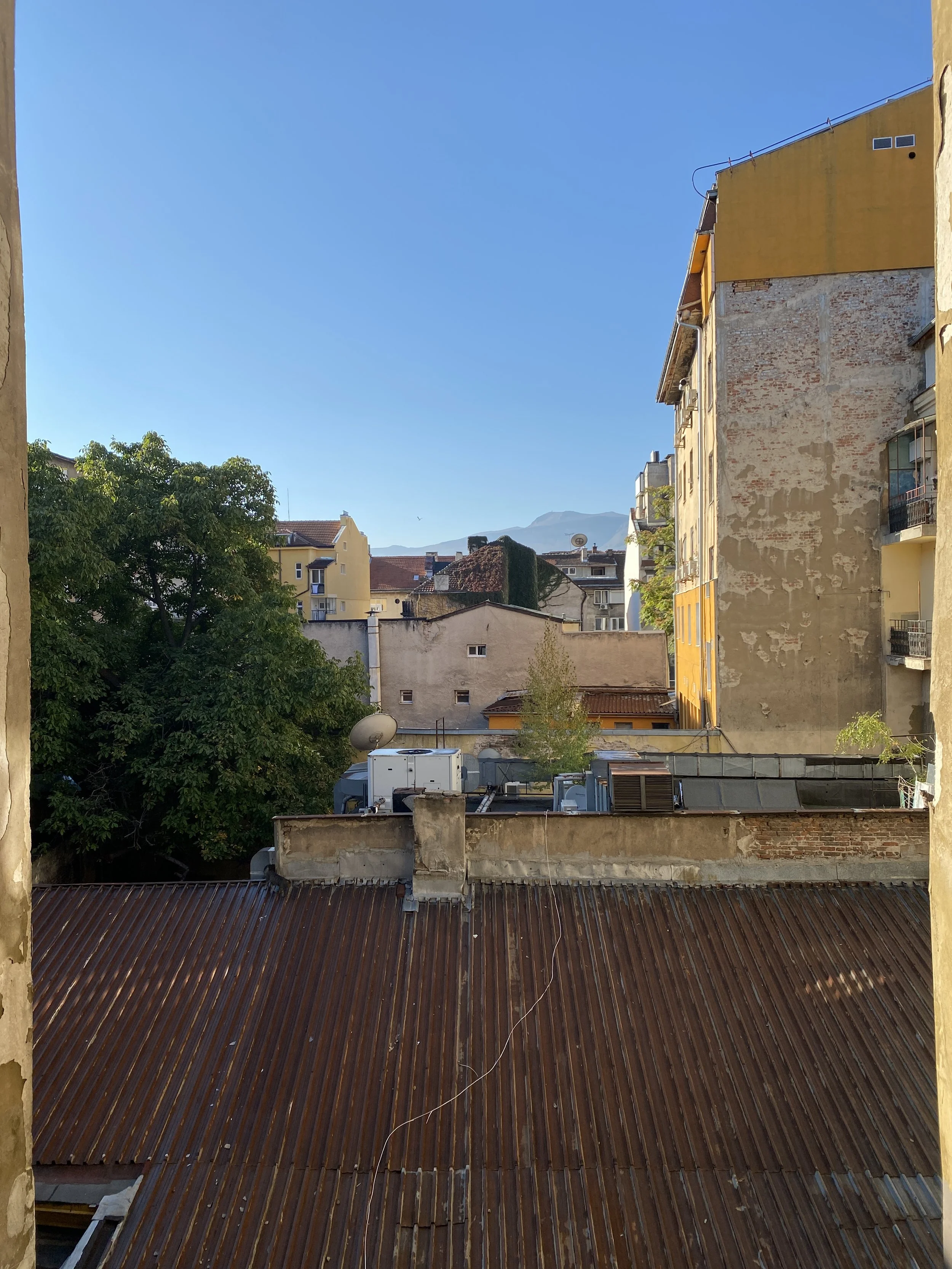
I once had a strange experience at a hostel in Bulgaria — though it honestly felt more like a small hotel. There was an older man and a woman who worked there. Since we arrived late at night, only the woman was there to check us in. The following evening, she began knocking on our door. The layout of the room was odd, and with the TV on and my friend showering right next to the door, I couldn’t hear her at first. Eventually, the knocking turned into loud banging. I got up to answer, but before I could even open the door, she unlocked it herself and barged in, saying, “I know you could hear me.”
It was jarring and upsetting — especially considering we could have been changing or completely undressed.
That experience doesn’t take away from my time in Bulgaria, though. I had a great stay overall and would absolutely return. If anything, it was a learning moment about doing deeper research before booking accommodations. While the people were generally kind, that particular situation was uncomfortable and unnecessary.
In contrast, I had a very different experience in Brno, Czechia. I was traveling with a group of about eight or nine people, and after checking out of our hostel, we went searching for a café to start the day. We found a gluten-free spot to accommodate one of the guys in our group, but when we arrived, there were barely any seats left. Instead of turning us away or making us wait indefinitely, two waitresses immediately began helping us rearrange tables and chairs outside. Most of us fit at one large table, with a couple of people seated nearby.
While we were ordering, some of the guys started joking around, and the waitresses jumped right into the banter. Everyone was incredibly friendly, patient, and genuinely happy to help. That experience wasn’t an exception — it reflected how I was treated across every Eastern European country I visited. Whether in stores, restaurants, or just asking for directions, people consistently went out of their way to be kind and helpful.
Of course, friendliness exists in Western Europe too. I had many warm and helpful interactions in Italy, for example. But overall, the energy can feel more reserved — almost like being in New York City, where people aren’t necessarily rude, just busy and uninterested in engaging beyond what’s necessary.
For a long time, I thought that was what I preferred. I assumed emotional distance and independence were part of the appeal. But after spending time in Eastern Europe — where that distance isn’t the norm — the openness felt refreshing. It shifted my perspective and made me realize that warmth, connection, and everyday kindness can completely change how a place feels.
Cost & Value
The cost of traveling in Eastern Europe is noticeably lower than in the West — and that difference matters.
I travel on a budget fairly often, which is a big reason I’ve found myself increasingly drawn to Eastern Europe. I wouldn’t consider myself an extreme budget traveler, but I’m also not someone who splurges on luxury every trip. I sit somewhere in between, and even at that middle ground, cost plays a huge role in where I choose to go.
Luxury travel can be wonderful. I’ve experienced it once before on a trip to Aruba, and I’ll be doing it again for my honeymoon in Sri Lanka in June 2026. But most of the time, I care less about high-end accommodations and more about how long I can stay somewhere and how freely I can experience it.
In Eastern Europe, almost everything costs less — accommodations, transportation (taxis, buses, trains), food, and activities. Because of that, I’m able to stay longer in one place without constantly worrying about my spending. That alone completely changes the way a trip feels.
Instead of choosing between cities or cutting experiences short, I can slow down. I can explore more neighborhoods, linger longer, and still save a noticeable amount of money compared to traveling in cities like Amsterdam, Paris, or Barcelona.
I can’t give an exact price breakdown or a perfect comparison between Eastern and Western Europe. These trips took place in 2024, and at the time, I wasn’t tracking every expense. But what I do remember clearly is how much further my money went. Some of my favorite thrift finds came from places like Czechia — small, unexpected treasures I wouldn’t have splurged on elsewhere.
I’m often reminded of this difference when I see travel videos online, especially ones about Switzerland. So many of them mention packing food from home just to avoid the cost of eating out. Countries like Switzerland or Liechtenstein can be incredibly beautiful, and I do recommend visiting them — but they’re also destinations where budget becomes a major barrier.
That contrast is exactly why Eastern Europe appeals to me so much. It makes travel feel more accessible, more relaxed, and less constrained by constant financial calculations — which, in my experience, leads to a much richer and more enjoyable journey.
Tourism & Crowds

Western Europe is expensive for a reason — it’s where everyone goes.
If you’re looking for somewhere quieter, calmer, and more peaceful, Eastern Europe offers a very different experience. You’re not constantly navigating crowds or competing for space, and you’re able to move through cities at your own pace. There’s room to breathe, wander, and actually notice where you are.
Everywhere I walked, the streets felt noticeably quieter. Some areas — especially those known for bars or nightlife — were busier, but even then, it never felt overwhelming or chaotic. I traveled during the off-season in the fall, so I can’t speak exactly to what summer looks like. Still, I’m confident it wouldn’t reach the same level of congestion you’ll find in places like Spain, France, or Portugal during peak travel months.
One of the biggest differences is the absence of constant “Instagram moments.” You’re not being pushed around for a photo or waiting in an endless line just to stand in the same spot everyone else has already seen online. Of course, there are well-known landmarks and popular locations, but they don’t feel consumed by tourism in the same way.
It never felt like Hallstatt, where crowds flood in for a single view, or like the Louvre, where seeing the Mona Lisa requires patience and strategy. Instead, the experience felt more organic — less about proving you were there and more about actually being there.
And yes, there’s something appealing about visiting places before they become overly saturated. Not to feel superior or “ahead of the curve,” but to experience them while they still feel rooted in everyday life rather than shaped entirely by tourism.
That sense of calm and balance is a big part of why traveling through Eastern Europe feels so refreshing to me.